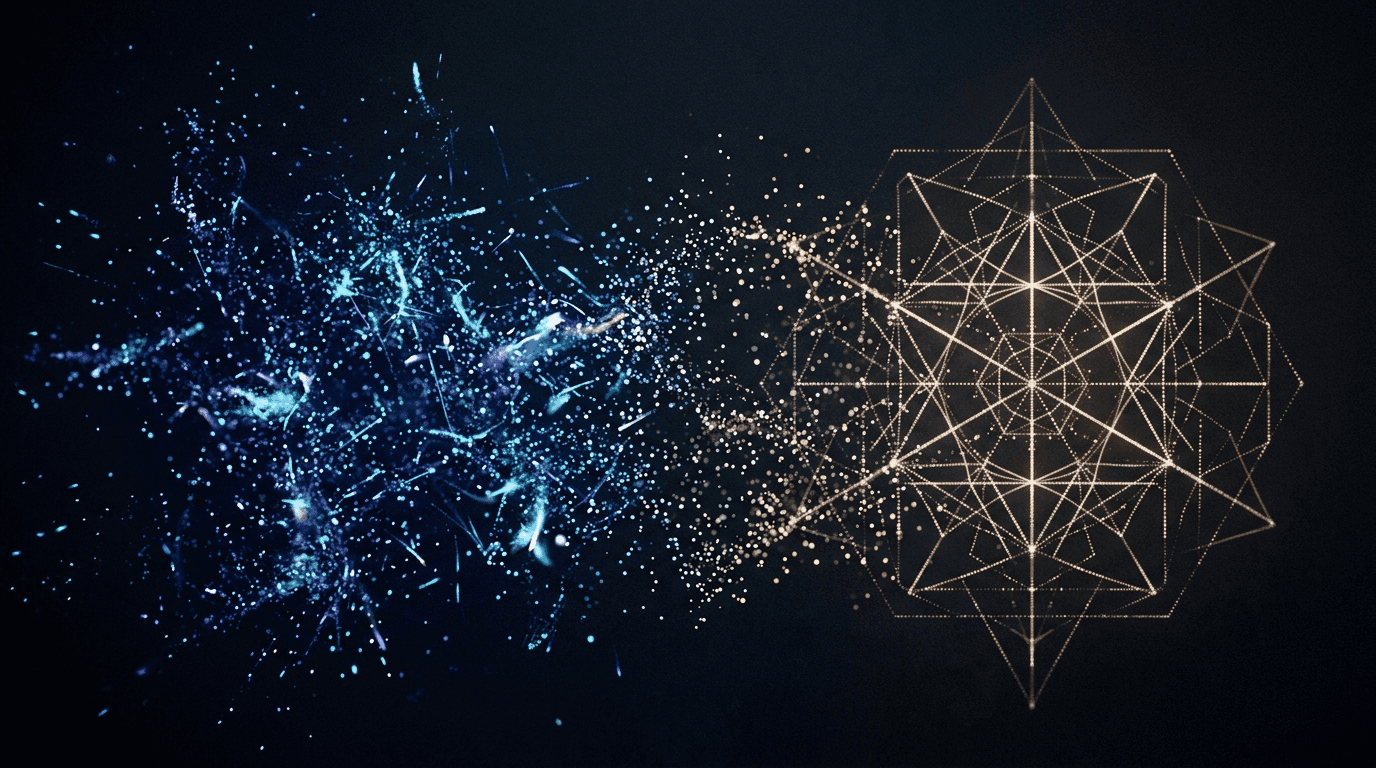
When Digital Isn't the Destination

Ask people about the best thing that happened to them this week. 42% point to something physical. A walk. A meal. A conversation. Only 15% name anything digital. Companies are spending billions making screens more immersive while people quietly rediscover what's on the other side of them.
The Counter-Trend Nobody Expected
Something unexpected is happening after two decades of digital acceleration. People are seeking depth, authenticity, and sensory richness. And they're finding it offline. A 2025 global consumer trends study puts a number on it: 42% of people attributed their most enjoyable experience in the past week to something done in real life. Only 15% cited a digital experience. That's not a margin. That's a chasm.
Sit with that. Companies are spending billions to make digital experiences more immersive, more personalized, more engaging. And people are saying their best moment this week was probably a walk, a meal, or a conversation with someone they care about.
Not an app. Not a feed. Not a notification that led somewhere clever.
This isn't a Luddite backlash. It isn't a temporary pandemic correction. Researchers call it "Social Rewilding": a recalibration of how people relate to their digital lives. The term comes from ecology, where rewilding means restoring natural processes that were disrupted. The parallel is deliberate. People are restoring social and sensory processes that two decades of digital saturation interrupted.
The data backs the deliberateness of it. The same research found that 65% of consumers now report being intentional about their social media use. They aren't abandoning platforms. They aren't deleting accounts in dramatic fashion. They're just being more thoughtful about when, where, and why they engage.
People aren't rejecting technology. They're demanding it earn its place.
For anyone who designs digital experiences (or pays for them) this shift changes the calculus entirely. The question isn't "how do we get more attention?" anymore. It's "what do we deserve attention for?"
Why This Is Happening Now
The Social Rewilding didn't appear from nowhere. Three converging forces created the conditions for it, and understanding them matters if you're going to respond rather than get blindsided.
Content Saturation Has Made Digital Spaces Exhausting
AI-powered content creation has flooded every digital channel with material that looks competent but feels interchangeable. Blogs, social posts, product descriptions, email campaigns. Volume up. Distinctiveness collapsed. The same 2025 consumer trends research found that 60% of people now question the authenticity of online content. When everything looks polished and nothing feels real, the rational response is to disengage. This is the sameness problem at its most visible.
Think about what that means in practice. Someone opens their phone, scrolls through a feed of content that all sounds vaguely the same, written in that unmistakable tone of confident generality. And they put the phone down.
Not because any single piece offended them. Because nothing earned their continued attention.
The sameness itself became the problem.
Attention Fatigue Has Reached a Breaking Point
Years of notification bombardment, infinite scroll mechanics, and engagement optimization have created a backlash. People are protecting their attention more deliberately than at any point in the smartphone era. The always-on expectation that defined the 2010s is giving way to something more guarded and selective.
You can see it everywhere. The rise of screen time tracking. The popularity of "dumb phones" as secondary devices. The growing cultural acceptance of being unreachable. What was once seen as antisocial (not responding immediately, not being on every platform) is increasingly seen as healthy. Social norms around digital availability are shifting fast.
The Authenticity Gap Has Undermined Trust
The most consequential force: 76% of people find it increasingly difficult to tell real content from AI-generated content, per the same 2025 consumer trends research. That number should alarm anyone who builds digital experiences for a living. When three-quarters of your audience can't confidently distinguish what's real from what's synthetic, you've got a trust problem that no amount of engagement optimization can solve.
When you can't trust what you see online, physical experiences become more valuable by default. Not because physical spaces are inherently superior. Because they're inherently verifiable. You know the coffee is real. You know the person across the table is real. You know the experience isn't being A/B tested or algorithmically selected for you.
That certainty has become a form of luxury. It's what drives the trust premium in every market.
How the "Stability Premium" Extends the Argument
A 2026 global consumer trends study introduces a concept called the "Stability Premium": in a world of constant disruption, consumers and employees place measurable value on predictable, trustworthy, and consistent experiences. Stability, in this framework, isn't a lack of innovation. It's a competitive advantage.
This connects directly to the Social Rewilding. People aren't just seeking physical experiences for novelty or nostalgia. They're seeking them for predictability. A coffee shop doesn't change its algorithm. A park doesn't A/B test your experience. A bookstore doesn't redesign its layout every two weeks based on conversion metrics. Physical spaces offer a consistency that digital spaces, by their very design philosophy, often don't.
The Stability Premium is the business case for reliability. The constant cycle of redesigns, feature changes, interface experiments, and "improvements" that define most digital products may be eroding the thing users value most: knowing what to expect. Every time a platform moves a button, changes a workflow, or reorganizes a feed, it spends a small amount of user trust.
Those withdrawals add up.
And here's where it gets interesting for anyone making design decisions. The Stability Premium doesn't mean never changing. It means changing with clear purpose, communicating changes honestly, and respecting the user's learned behavior. Treating consistency as a feature rather than a constraint. An entirely different design philosophy than what most digital teams operate under today.
What This Means for Digital Design
This is where the Social Rewilding stops being an abstract cultural observation and becomes specifically useful. The trend doesn't mean digital doesn't matter. If anything, it means digital matters more. But its role is changing. The digital experiences that thrive in this environment won't look like the ones that dominated the last decade.
Digital as Gateway, Not Destination
The most effective digital experiences going forward will be the ones that connect people to something real: an event, a community, a physical product, a human conversation. Digital that tries to be the entire experience loses to digital that opens the door to a richer one.
A meaningful strategic shift. For years, the dominant model was to keep people inside the digital experience as long as possible. Maximize session duration. Reduce exits. Create loops that discourage leaving. The Social Rewilding inverts that logic. The best digital experience might be the one that efficiently and gracefully gets someone to the thing they want.
And that thing may not be digital at all.
A restaurant's website that clearly shows the menu, hours, and a way to reserve a table. And does nothing else. That's better aligned with this moment than an elaborate interactive experience that delays the user from making a reservation. Utility and clarity outperform spectacle when people are being intentional about their digital time.
Designing for Intentional Users
Users are becoming more deliberate about where they spend digital attention. This changes the design contract deeply. Every interaction must justify its existence. Autoplay videos, notification spam, engagement tricks, interstitial pop-ups. These now actively damage the relationship with the user. They signal that you value your metrics more than their time.
The design philosophy shifts from "capture attention" to "deserve attention." That isn't just a reframing. It changes what you build. It changes what you measure. It changes what success looks like.
A page that loads fast, communicates clearly, and lets someone accomplish their goal without friction. That's what respect looks like in an era of intentional usage. Not clever. Not surprising. Respectful.
What does it look like to design for someone who chose to be here? Clarity. Restraint. Trusting that the content itself is enough without manufacturing urgency or engineering compulsion. Designing for intentional users is, in many ways, easier than designing for captured ones. You just have to be willing to let go of the tricks.
Authenticity as a Design Constraint
When 76% of people can't tell real from AI-generated, design that signals authenticity becomes a competitive advantage. Real photography over AI-generated images. Specific language over generic copy. Human voice over corporate polish. Named people over stock personas. The design choices that feel authentic stand out precisely because authenticity is becoming rare.
This has practical implications. It means investing in original photography rather than relying on AI image generation or stock libraries. It means writing copy that sounds like a specific person rather than a language model's approximation of professionalism. It means showing the humans behind the work, with their names, their faces, their perspectives.
Authenticity isn't a style choice anymore. It's a trust signal. And in an environment where trust is the scarcest resource, it functions as a design constraint every bit as real as accessibility or performance. You either design for it deliberately or you lose it by default.
The Stability Premium in Digital Experiences
Consistency, predictability, and reliability become first-order design priorities. A site that behaves the same way every time you visit it builds trust. A site that constantly redesigns, reorganizes, or experiments on its users erodes it. This runs counter to the "always be testing" ethos that's dominated digital product development for years, and that tension is worth sitting with.
Stability isn't boring. It's trustworthy.
Think about the digital products you trust most. Chances are they share a common trait: you know what to expect from them. You know where things are. You know how they work. That predictability isn't a failure of innovation. It's the product of design maturity. And in the era of the Stability Premium, it's exactly what users are telling us they want.
This doesn't mean freeze your product forever. It means earn the right to change it by proving that each change serves the user, not just your conversion funnel. It means treating your users' learned behaviors as something valuable rather than something to disrupt for the sake of a quarterly experiment roadmap.
The Paradox Brands Have to Resolve
And the paradox is a sharp one. Brands need digital presence more than ever. Discovery increasingly happens through search, social platforms, and AI-powered recommendation systems. If you aren't visible digitally, you're functionally invisible. That hasn't changed. If anything, with AI-driven search reshaping how people find information, digital visibility matters more than it did two years ago.
But brands also need to use digital more thoughtfully than ever. Because the people they're trying to reach are protecting their attention, questioning authenticity, and gravitating toward physical experiences. The audience is more skeptical, more selective, and more willing to disengage from experiences that feel extractive rather than generous.
The resolution isn't complicated, but it requires a shift in posture. Build digital experiences that are clear and useful. And that connect people to something beyond the screen. The brands that try to make digital the entire relationship will lose to the brands that use digital to start one.
Your website, your social presence, your digital content. These are introductions, not destinations. They should make people want to know you, not try to replace the knowing.
The companies that get this right won't be the ones with the most immersive digital experiences. They'll be the ones whose digital presence feels like an honest extension of who they are. And whose real-world experience delivers on the promise.
What Design Teams Should Do About It
If the Social Rewilding is reshaping how people relate to digital experiences, the response should be concrete, not philosophical. Start with these.
Audit your digital experience for attention-capturing patterns that may now be eroding trust. Autoplay videos, aggressive notification prompts, exit-intent pop-ups, dark patterns that make unsubscribing difficult. These tactics were always ethically questionable. Now they're also strategically counterproductive. They signal to intentional users that your interests and theirs aren't aligned.
Design for intentional users who arrived deliberately, not captured users who stumbled in. This changes your information architecture, your calls to action, and your content strategy. Someone who chose to visit your site deserves an experience built for decision-making, not entrapment. Respect their intent and they'll reward you with trust.
Use real photography, real language, and real human voices wherever possible. In an environment where 76% of people struggle to distinguish real from AI-generated content (2025 consumer trends research), the investment in authenticity pays for itself. Original visuals and specific, human-sounding language are trust signals that generic alternatives can't replicate. Investing in authentic creative production pays compounding returns in this environment.
Build consistency and predictability into the experience. Resist the urge to constantly experiment on users. When you do make changes, communicate them clearly and give people time to adjust. Treat your users' familiarity with your product as an asset, not an obstacle to improvement.
Think of your digital presence as the gateway to a relationship, not the relationship itself. The most effective digital experiences in the rewilding era will be the ones that efficiently, gracefully, and honestly connect people to something they value beyond the screen. Whether that's a product, a service, a community, or a conversation with a real person.
The Social Rewilding isn't a rejection of technology. It's a demand that technology serve people rather than extract from them. The language of engagement metrics, attention capture, and conversion improvement. All of it assumes the goal is to take something from the user. Time, attention, data, money.
The rewilding asks a different question: what are you giving back?
A well-designed room doesn't try to trap you in it. It makes you glad you walked in, gives you what you came for, and lets you leave when you're ready. The best digital experiences will do the same.